Nik Kinley
Psychologist. Executive Assessor. Coach.
A psychologist and psychotherapist spent a decade analysing people in prisons before advising the boardrooms of $90 billion businesses. Over 30 years experience understanding how people behave, predicting what they’ll do next, and helping them change. .

Understanding how people behave & helping them change
Nik Kinley learned to read people and change behaviour in prisons before he ever worked in a boardroom.
A psychologist and psychotherapist by training, he spent more than a decade as a forensic psychotherapist working with offenders, before going into consultancy, then moving into senior global HR roles at BP and Barclays, and from there into leadership assessment, coaching and advisory work.
Over 30 years his work has taken him from children, prisoners and politicians to royalty, and from the CEOs of national banks and $90 billion businesses to national-security chiefs, hedge-fund bosses and Formula 1 engineering leads. The settings changed, but the work stayed the same: understanding how people behave, predicting what they'll do next, and helping them change.
Alongside this, he has led a 15-year research collaboration with colleagues at IMD Business School exploring how experience shapes leaders, how power changes their judgment, and how they in turn shape the people and culture around them. He has written eight books on leadership — most recently The Power Trap — and more than a hundred articles, translated into multiple languages. He appears as an expert on the BBC and France 24, and lectures regularly at IMD in Switzerland.
Clients tend to call him for support with one of three things. A big appointment where getting it wrong is expensive. A leader in a job that's suddenly much bigger of challenged. Or an organisation where decisions keep dying between the top and the front line.
How I work with leaders and organisations
Bespoke, targeted and pragmatic. Every engagement is grounded in psychology and 30 years at the sharp end of leadership.
Executive Assessment & Succession
In-depth psychological evaluation for CEO and C-suite roles, and the succession decisions that depend on getting them right.
Leadership Coaching
Developing leaders' impact through bespoke, targeted and pragmatic one-to-one work.
Speaking & Lecturing
Presenting the latest research on leadership and power, with topics tailored to each audience.
Organisational Change
Leadership development and culture & behaviour change across the enterprise.
Board & Exec Team Training
Helping boards and executive teams optimise information flow and manage power dynamics.
Advisory
Trusted counsel to private equity firms, portfolio companies and leaders navigating high-stakes decisions.
Eight books turning hard research into practical advantage
Each takes rigorous academic research, distils it into plain language, and shows how it adds value to leaders and their businesses.
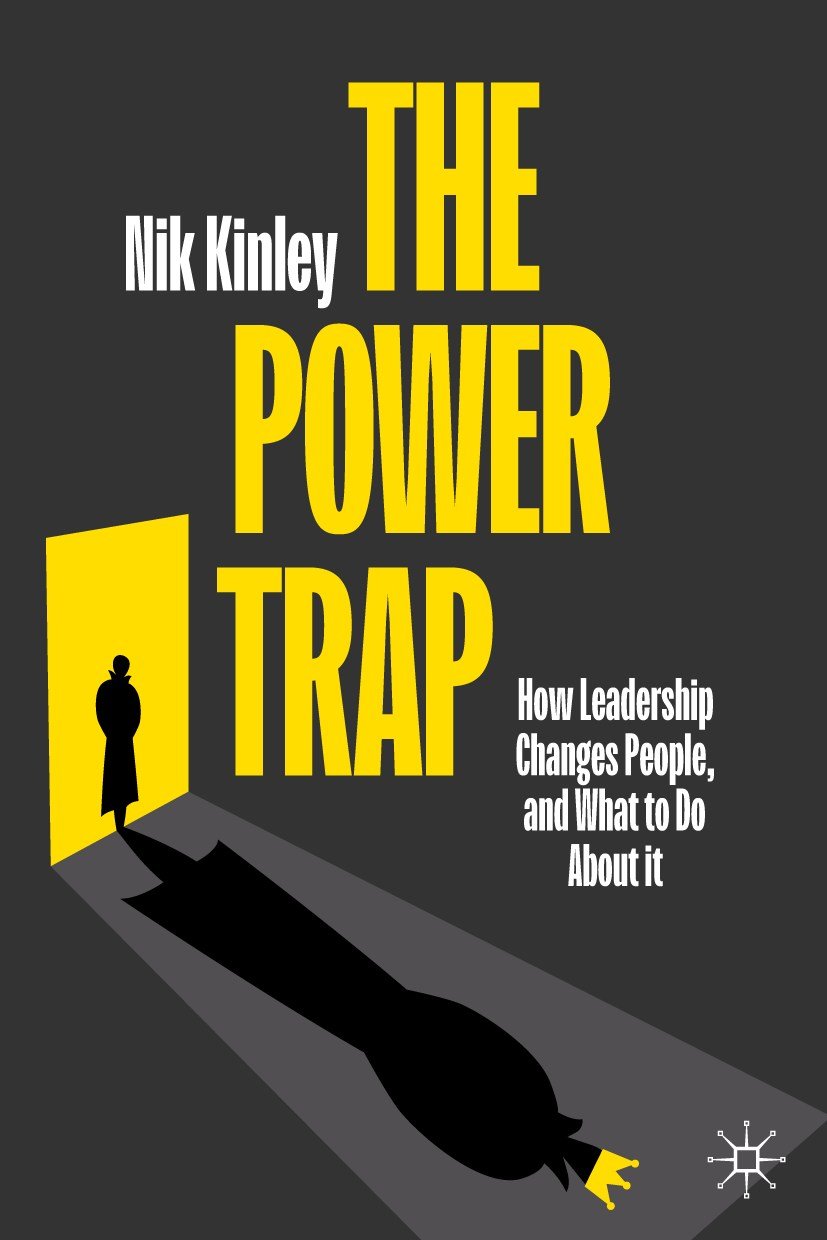
The Power Trap
We have an entirely messed-up relationship with power. Almost everyone wants it, it promises much — yet we rarely talk about it or understand it. Power is essential to every leadership role, but it's also a difficult and sometimes toxic partner that changes everyone who holds it.
Drawing on the latest neuroscience, The Power Trap reveals what power does to people, and offers clear, practical lessons for surviving it — for leaders, for organisations, and for all of us who choose and follow them.
View the book ↗Rewriting Your Leadership Code
How your leadership instincts are founded in childhood experience — and how to optimise them under pressure.
Leadership OS
The operating system of leadership: the factors that determine a leader's true impact.
Talent Intelligence
How to assess leaders, and make genuine use of the data.
Changing Employee Behaviour
How to change people's behaviour to improve performance and transform culture.
Recent articles, essays & appearances
A selection of Nik's writing and commentary across the business and management press.
What 1,200 studies reveal about how childhood shapes leaders' behaviour
Observer Read ↗The efficiency trap in corporate AI spending
Inc Read ↗AI's bias is a growing risk to decision-making
European Business Review Read ↗5 Signs your information architecture in failing you
Observer Read ↗The Efficiency Trap Inside Corporate A.I. Spending
Fast Company Read ↗What happens when a founder won’t leave the new CEO alone (and what to do about it)
Forbes Read ↗How leaders can spot and deal with toxic behaviours in teams
CEO World Read ↗Why power reveals both strengths and flaws
MIT Sloan Management Review Read ↗The missing piece in employee development
Fast Company Read ↗What happens to middle management when AI flattens your organisation
Management Today Read ↗What happens to your brain when you're in charge
Entrepreneur Read ↗Why all leaders need a touch of narcissism
Fast CompanyRead ↗Five signs your cognitive load is too high and what to do about it
Management Today Read ↗The dangers of relying on your instincts
City AM Read ↗Senior leaders are both your happiest and most miserable staff
People Management Read ↗What HR leaders need to know about power
Duke University Dialogue ReviewRead ↗The dangers of drift: How to ensure good decisions survive contact with your oragnisation
Harper's Bazaar Read ↗Good kid, bad boss
Harvard Business Review Read ↗Turning talent data into real decisions
Management Today Read ↗When board confidence can be a red flag
Growth Hacking Podcast Read ↗Podcast: The Neuropsychology of Power
Fast Company Read ↗AI Psychosis is the New Leadership Blindspot
Get in touch
If you're interested in talking or working with Nik, send a message below and he'll get back to you.
Let's talk
Whether it's an assessment, a coaching engagement, a speaking slot or a conversation about power and leadership — I'd be glad to hear from you.